Keeping the pH of your pool water in balance is key to enjoying a safe swim, avoiding damage to equipment and ensuring the effectiveness of chlorine. However, it is common for the pH to rise more than recommended without you noticing it with the naked eye. In this article we explain why the pH rises, how to detect it in time, its consequences and, above all, what to do if the pH of the pool is high. Read on to learn how to keep your pool in tip-top condition.
Why does the pH rise in a pool?
The pH of a pool can rise due to various natural factors or maintenance errors. When this occurs, the water becomes less acidic and more alkaline, which can lead to multiple issues with water quality, chemical efficacy, and bather safety.
Common Factors That Raise pH
Some of the most common causes of high pH in swimming pools include:
- Use of alkaline chemicals, such as sodium hypochlorite (liquid chlorine) or sodium carbonate.
- Filling water with high pH, especially if it comes from wells or areas with high mineralization.
- Water evaporation, which concentrates minerals and raises pH.
- Little water renewal or absence of partial drainage.
- Lack of maintenance and regular adjustments of the chemical balance.
How to detect a high pH in a pool
A high pH isn’t always visible to the naked eye, but there are clear signs you can easily identify:
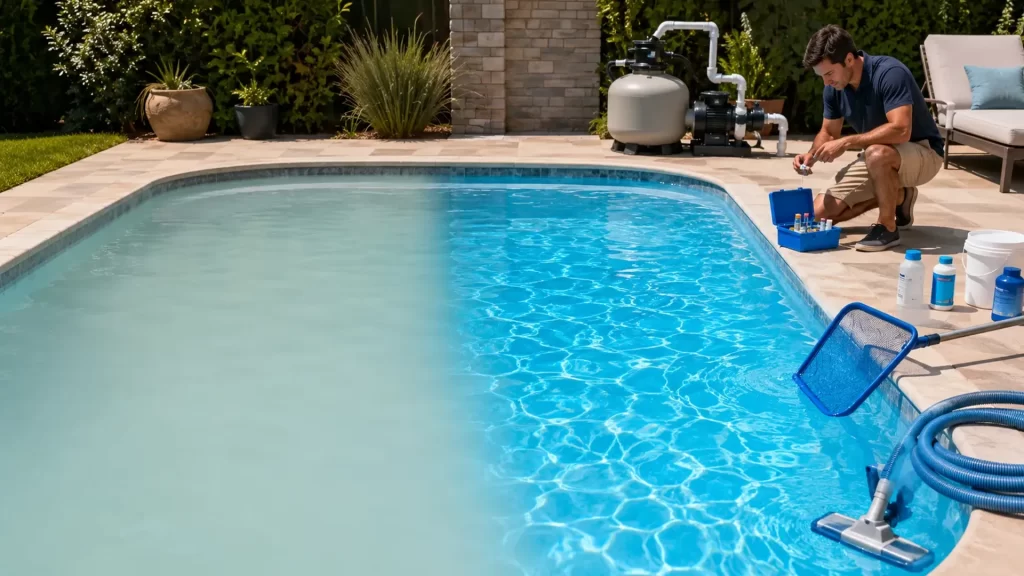
- Test with measurement kit or test strips: If the result exceeds 7.8, the pH is considered high.
- Cloudy or milky water with no apparent cause.
- White or limestone inlays on walls, stairs or fixtures.
- Irritation to the eyes and skin after swimming.
- Chlorine is not very effective, even if you dose it correctly.
 Recommendation: measure the pH at least 2 times a week, especially in summer or with intensive use of the pool.
Consequences of high pH in the pool
A high pH can affect both the quality of the water, the health of the users and the useful life of the filter system.
The most common consequences are:
- Damage to the filtration system and coatings: Alkaline water can form limescale deposits that clog filters, pumps and pipes.
- Ineffectiveness of chlorine: With high pH, chlorine loses much of its disinfectant capacity, which facilitates the appearance of bacteria and algae.
- Eye and dermal irritation: although it is believed that the irritation is due to excess chlorine, it is often the high pH that is the cause.
- Formation of turbid water or with white residues: it is due to the precipitation of minerals, especially calcium.
- Higher expenditure on chemicals: You need more chlorine to maintain disinfection at a high pH.
Is it dangerous to bathe in a pool with a high pH?
Yes, swimming in a pool with a high pH can be harmful to your health. Even if the water looks clean, its chemical composition is out of balance and can cause discomfort or major problems. Even if the water looks clean, its chemical composition is out of balance and can cause discomfort or major problems.
- Irritation in the eyes and mucous membranes: the chemical imbalance directly affects sensitive tissues.
- Itchy and dry skin, especially in people with sensitive skin or pre-existing dermatological conditions.
- Mild respiratory problems in some cases, due to irritation of the nasal passages.
- Increased risk of bacterial contamination, as chlorine loses its effectiveness when pH is not controlled.
Recommendation: Do not bathe if the pH is above 7.8 and the free chlorine is below safe levels. Adjust the parameters before allowing the use of the pool.
What to do if the pH of the pool is high?
When you detect a high pH, you need to act quickly to prevent further damage. Lowering pH is a simple process if you follow the right steps and use the right products.
Steps to lower the pH of the pool:
- Measure the current pH with a reliable kit. The ideal is between 7.2 and 7.6.
- Use a pH reducer (such as muriatic acid or sodium bisulphate).
- Follow Aquanet’s instructions, respecting the dose according to the liters of your pool.
- Distribute the product evenly throughout the pool with the filter system on.
- Wait 4-6 hours, measure again, and adjust if necessary.
- Monitor every 2-3 days, especially during times of heavy use or high temperatures.
Tips to keep the pH stable:
- Check the pH and chlorine at least twice a week.
- Avoid adding chemicals without measuring first.
- Perform periodic partial drainage if the water is saturated with minerals.
- Clean and check the filters regularly.