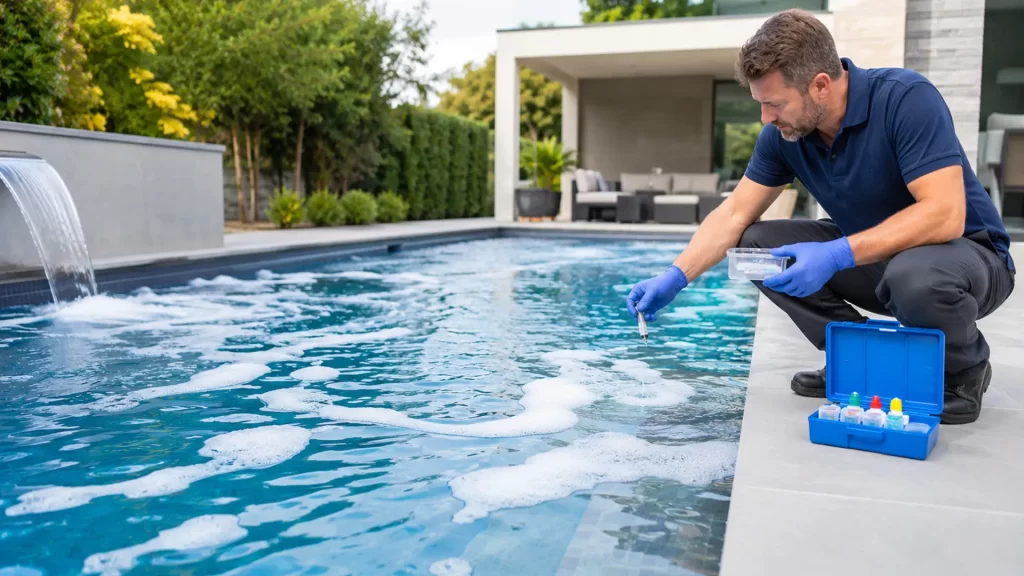
The appearance of foam in swimming pool water is a relatively common problem that can affect private pools as well as those at hotels, campsites, housing estates and sports centres. Although in many cases it does not pose an immediate health risk, it is a sign that there is an imbalance in water quality that should be corrected as soon as possible.
Foamy pool water not only looks unsightly, but may also indicate a build-up of organic debris, an excess of chemicals or problems with the filtration system. Identifying the cause is essential in order to apply the correct treatment and prevent the problem from recurring.
In this article, we look at why foam forms in a swimming pool, what the most common causes are, and how to remove foam from the pool water effectively.
Why does foam appear in the pool water?
Foam is produced when certain substances present in the water reduce surface tension and encourage the formation of persistent bubbles. This phenomenon is usually most noticeable when the water is in motion, for example, when the water treatment plant is operating, in waterfalls, jets or hydromassage systems.
Accumulation of organic matter
One of the most common causes of foam in swimming pool water is the build-up of organic waste from bathers.
These include:
- Traces of sun cream.
- Body oils.
- Cosmetics.
- Sweat.
- Hair care products.
When these contaminants build up, the filtration system may not be sufficient to remove them completely, leading to foaming.
Excessive use of algaecides
Some algaecides, particularly those formulated with non-polymerised quaternary ammonium compounds, may cause foaming if used at doses higher than those recommended.
This problem usually arises following preventative or corrective treatments carried out without precise control of the dosage.
Presence of detergent residues
Detergents are a common source of foam in swimming pools.
They can reach the water via:
- Swimwear that has been washed recently.
- Cleaning equipment that has not been rinsed properly.
- Cubiertas y accesorios limpiados con productos jabonosos.
- Contaminated maintenance tools.
Even small amounts can cause the water in a swimming pool to become foamy, particularly in smaller pools.
Chemical imbalance in water
Chemical parameters have a direct influence on water stability.
An incorrect pH, a high organic load or insufficient disinfection can encourage the build-up of substances that cause foaming.
Filtration problems
A poor filtration system makes it difficult to remove particles and dissolved contaminants.
The most common problems include:
- Clogged filters.
- Damaged cartridges.
- Insufficient filtration time.
- Poor hydraulic flow.
How to identify the source of the foam
Before starting any treatment, it is important to make a proper diagnosis.
Watch to see when the foam appears
The foam may provide clues as to its origin:
|
Situation |
Possible cause |
|
After adding algaecide |
Excess product |
|
After intensive use |
Organic matter |
|
With fountains or waterfalls |
Surfactants in water |
|
Following heavy rain |
External pollution |
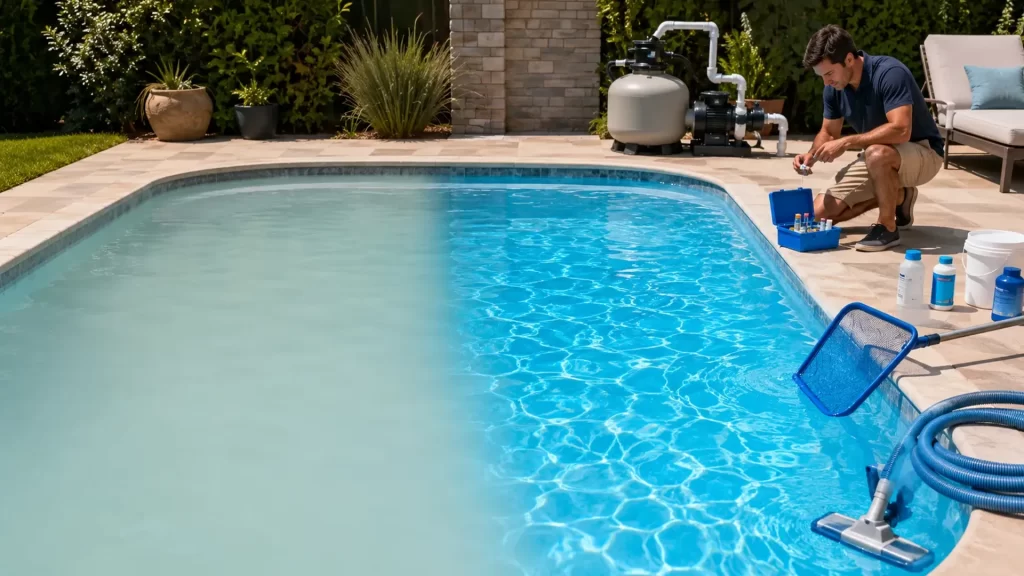
Analyses water parameters
The analysis makes it possible to detect imbalances that encourage the formation of foam.
It is recommended that you check:
- pH.
- Free chlorine.
- Free chlorine.
- Alkalinity.
- Phosphates.
- Organic matter content.
How to remove foam from swimming pool water
Once the cause has been identified, it is possible to implement the appropriate corrective measures.
Carry out a shock chlorination treatment
When foam is caused by the build-up of organic pollutants, shock chlorination helps to oxidise and remove the substances responsible.
This treatment enables:
- Reduce organic waste.
- Improve water clarity.
- Restore the disinfectant’s effectiveness.
- Reduce foaming.
Improving filtration
Filtration is key to removing the particles and compounds responsible for the problem.
The recommended actions include:
- Filter backwash.
- Thorough cleaning of the filter media.
- Replacement of damaged cartridges.
- Temporary increase in filtration hours.
Use specific defoamers
Defoaming products are formulated to quickly remove surface foam.
They are particularly useful for:
- Swimming pools with hydromassage.
- Spas.
- Heated swimming pools.
- Facilities with water play areas.
However, it is worth bearing in mind that they eliminate the symptom, but not the cause of the problem.
Renovar parcialmente el agua
Where there is a high concentration of dissolved substances, it may be advisable to carry out a partial water change.
This measure helps to reduce:
- Surfactants
- Chemical waste.
- Excess stabiliser.
- Accumulated pollutants.
Apply brightening treatments
Flocculants and clarifiers help microscopic particles to clump together so that they can be retained by the filter.
This significantly improves the visual quality of the water and helps to remove foam-related compounds.
How to prevent foam from forming in your swimming pool
Prevention is the best strategy for avoiding this problem.
Monitoring the dosage of chemicals
It is essential to follow the manufacturers’ recommended dosages, particularly when using:
- Algaecides.
- Flocculants.
- Clarifiers.
- Defoamers.
Ensuring good personal hygiene amongst bathers
A few simple measures can help reduce pollution:
- Have a shower before your bath.
- Avoid using too much cream and oil.
- Do not enter the water if there are traces of detergent on your swimwear.
Carry out regular analyses
Regular monitoring of chemical parameters makes it possible to detect imbalances before any visible problems arise.
Optimising filtration
The treatment plant must operate for a sufficient length of time to ensure that the water is properly recirculated and cleaned.
During peak periods, it may be necessary to increase the filtration time.
Recommended products for removing foam
Depending on the cause of the problem, various treatments may be used:
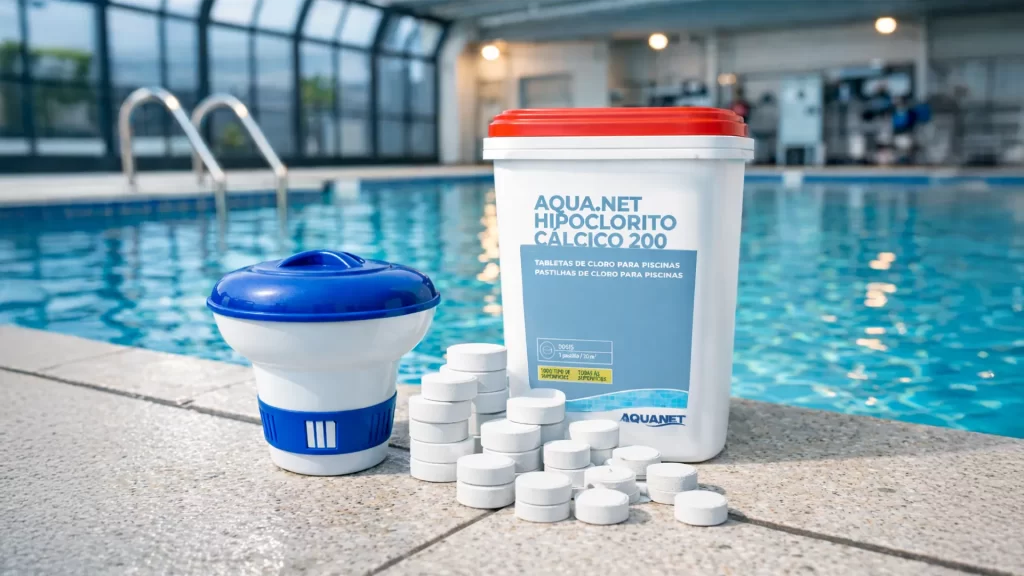
- Shock treatment with chlorine to remove organic matter.
- Specific defoamers for removing surface foam.
- Clarifiers and flocculants to improve filtration.
- Filter cleaners to optimise system performance.
- pH regulators to restore the chemical balance.
The right combination will always depend on the prior analysis of the water.
Conclusion
The presence of foam in swimming pool water is usually linked to the build-up of organic debris, the excessive use of certain chemicals or filtration problems. Although it may look worrying, in most cases the problem can be resolved if its cause is correctly identified.
If you notice that your pool water is foamy, it is best to test the water parameters, check the filtration system and apply the appropriate treatment. Preventative maintenance, combined with the correct use of pool chemicals, will help keep the water crystal-clear, balanced and free from foam throughout the season.