Knowing how to clean the bottom of a swimming pool is essential for keeping the water in perfect condition, preventing cloudiness and extending the life of the filtration system. Although the water may appear clean at first glance, debris such as sand, leaves, insects, algae and small particles often accumulate at the bottom, affecting the quality of the water.
As well as proper disinfection and maintaining the correct chemical balance, removing dirt from the pool floor is an essential part of basic maintenance throughout the season. In this guide, we explain how to clean the bottom of a swimming pool, what tools you’ll need, and how to effectively remove deposits and sand from the pool floor.
Why does the bottom of the pool get dirty?
Debris constantly accumulates at the bottom of the pool, even when we use pool covers or automatic cleaning systems. The most common causes are:
- Dust and sand swept up by the wind
- Organic matter such as leaves or insects
- Sun creams and oily residues
- Calcareous sediments
- Algae bloom
- Dirt brought in by bathers
When this debris remains in the water for too long, it can cause stains, encourage the growth of microorganisms and hinder the effectiveness of pool chemicals.
How to clean the bottom of a swimming pool properly
Before you start cleaning the bottom, it is a good idea to check a few basic points:
- Check the pH level of the water (ideally between 7.2 and 7.6)
- Check that the filtration system is working properly
- First, clear the surface with a leaf rake
- Scrub walls and corners to remove stubborn dirt
This will make it easier to remove debris later and improve the efficiency of the filtration process.
Tools for cleaning the bottom of the pool
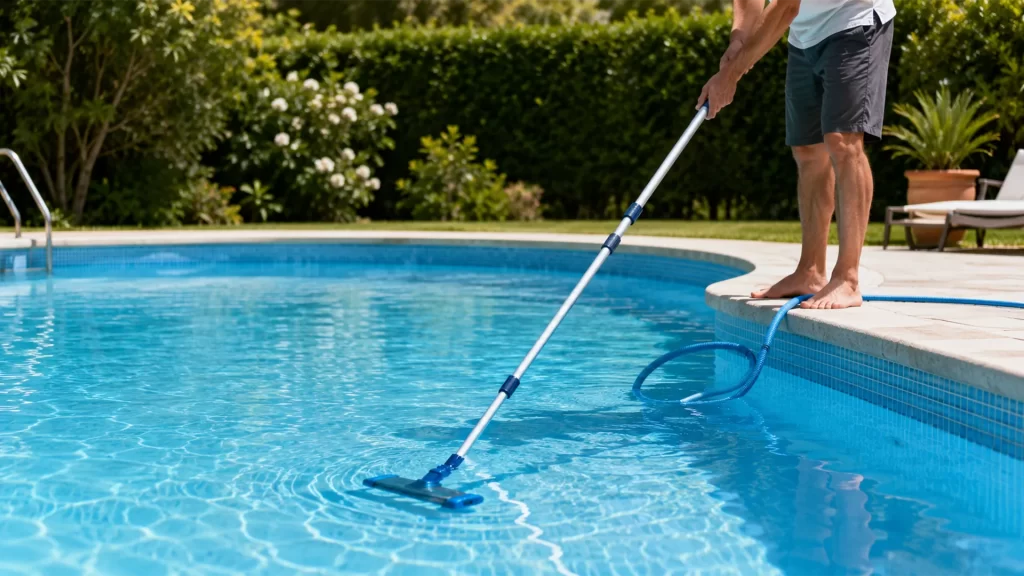
Manual pool cleaner
The manual pool cleaner remains one of the most effective options for private pools. It allows you to control the cleaning process and reach specific areas where dirt tends to accumulate.
You will need:
- Pool cleaner head
- Floating hose
- Telescopic pole
- Suction inlet or skimmer
It is ideal for removing deposits and grit from the bottom of the pool with precision.
Automatic pool cleaner
Automatic robots make maintenance much easier. They vacuum up debris, scrub the floor and even the walls, reducing the amount of manual labour required.
They are particularly recommended for:
- Large swimming pools
- Frequently used swimming pools
- Zonas con mucho polvo o vegetación
Hydraulic pool cleaners
They operate by connecting to the pool’s filtration system. They offer a middle ground between manual pool cleaners and automatic robots.
Step by step: how to clean the bottom of a swimming pool
- Conecta el limpiafondos
Slowly lower the hose into the water to prevent air pockets from forming. Then connect the system to the suction inlet or the skimmer.
- Turn on the water treatment plant
Switch on the filtration system to generate the necessary suction.
- Sip slowly
Realiza movimientos suaves y ordenados para no levantar la suciedad acumulada. Lo ideal es avanzar de un extremo al otro de la piscina.
A common mistake is to move the pool cleaner too quickly, which causes the particles to scatter again.
- Check the filter
After cleaning, clean the pre-filter and backwash the sand filter if necessary. This prevents a drop in the filter’s performance.
How to remove sand and deposits from the bottom of the pool
One of the most common problems is the build-up of sand or fine sediment on the bottom. This may be due to:
- Dust ingress from outside
- Worn-out filters
- Incorrect flocculation
- Hard water containing minerals
To effectively remove deposits and grit from the bottom of your pool, you can follow these recommendations:
| Problem | Recommended solution |
|---|---|
| Fine sand on the bottom | Vacuum in emptying mode |
| Cloudy water containing sediment | Use a flocculant |
| Persistent debris | Pre-brushing and slow suction |
| Frequent build-up | Check the filter and valves |
In the case of very fine particles, vacuuming them directly into the drain may be more effective than using a filter.
Recommended products for keeping the tank clean
In addition to mechanical cleaning, some products help prevent the build-up of dirt:
- Flocculants: these cause microscopic particles to clump together, making it easier to remove them using a filter or a pool cleaner.
- Anti-algae: prevents the growth of algae that usually builds up on the walls and bottom.
- Water clarifiers: improve clarity and help keep the water crystal-clear.
- pH regulators: balanced water improves the effectiveness of all chemical treatments.
How often should the bottom of the pool be cleaned?
The frequency will depend on the pool’s usage and environment, although the following is generally recommended:
- In summer: once or twice a week
- Swimming pools with trees nearby: more common
- After storms or strong winds: clean up immediately
- Heavily used swimming pools: daily inspection of the pool floor
Regular cleaning prevents the build-up of stubborn grime and reduces the use of cleaning products.
Common mistakes when cleaning the bottom of the pool
- Do not clean the filter afterwards: a clogged filter loses its effectiveness and reduces water quality.
- Neglecting the chemical balance: even if the tank is clean, water that is out of balance encourages algae growth and cloudiness.
- Vacuuming too quickly: the dirt gets kicked up again and the cleaning is less effective.
- Do not pre-brush: a lot of debris will stick to the surface if it is not brushed first.
Now that you know how to clean the bottom of a swimming pool, you’ll be able to keep the water much cleaner, clearer and healthier throughout the season. A combination of a good maintenance routine, an efficient filtration system and the right products is key to removing dirt from the bottom of the pool and preventing future problems.
Whether you use a manual, hydraulic or automatic pool cleaner, the important thing is to clean the pool regularly and keep an eye out for the build-up of sand, sediment and organic debris. A clean pool floor not only improves the pool’s appearance, but also the water quality and the swimming experience.