Choosing between a chlorine or salt pool is one of the most common doubts among those who are going to install a pool or are thinking of changing their disinfection system. Both methods are effective, safe and widely used, but they have significant differences in terms of operation, maintenance, cost and bathing experience.
In this article we explain in a clear and objective way the differences between salt or chlorine pools, their advantages and disadvantages, and help you decide which is better according to your needs.
Chlorine or salt pool: main differences
When we talk about chlorine or salt pools, we are actually talking about two different ways of generating the same disinfectant: chlorine.
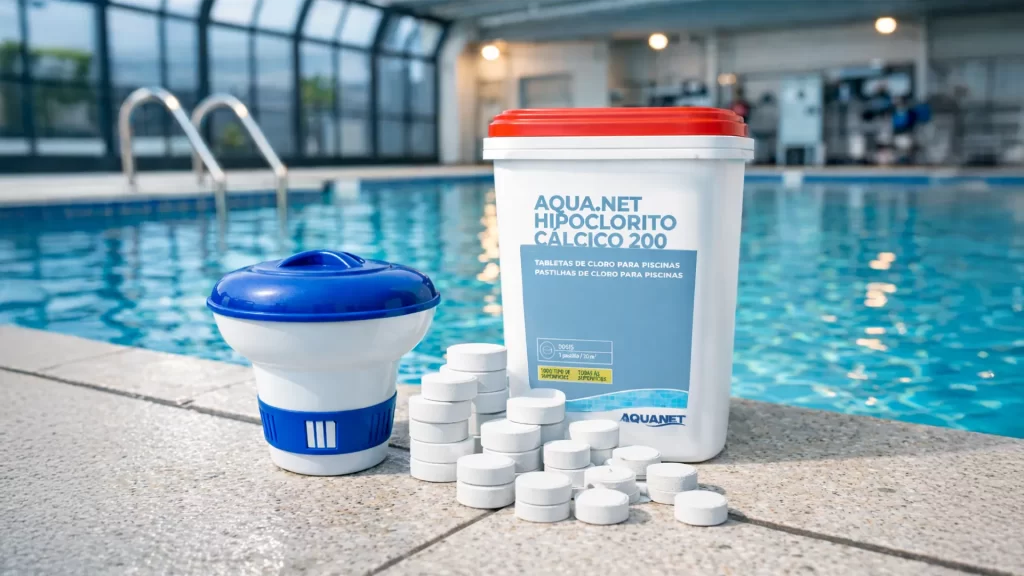
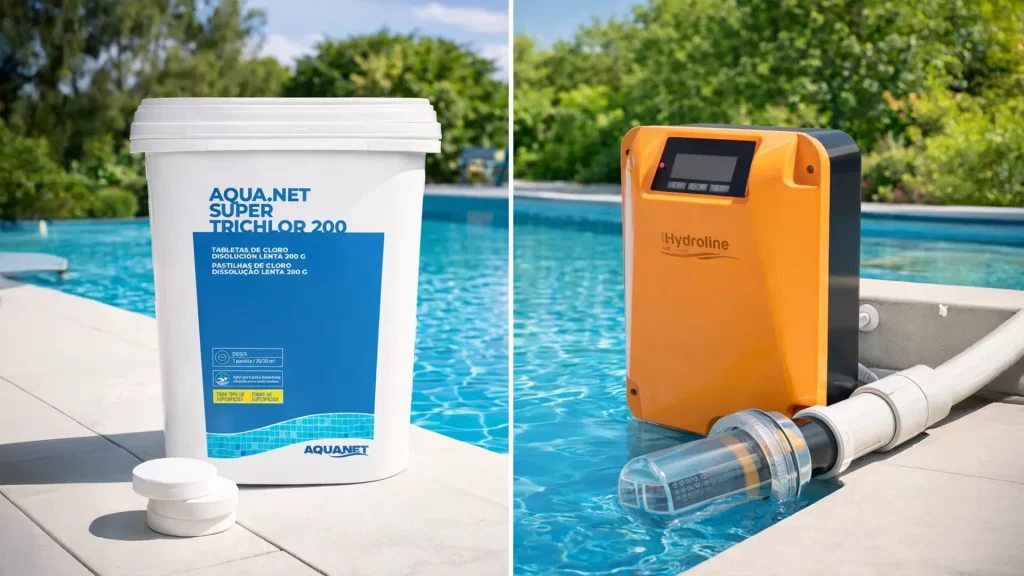
- In the chlorine pool, chlorine is added directly to the water in liquid, granulated or tablet form.
- In the salt pool, chlorine is automatically generated from salt dissolved in the water by a salt chlorinator.
The difference is not in the final result (both disinfect with chlorine), but in how that chlorine is obtained and managed.
How a chlorine pool works
In a traditional pool, maintenance is based on the regular dosing of chemicals, mainly chlorine.
Chlorine kills bacteria, viruses, and microorganisms, keeping the water clean and safe. It can be added manually or by automatic dispensers.
Advantages of chlorine pool
- Lower initial investment
- Simple and familiar system
- Easy adaptation to any type of pool
- Wide variety of formats and treatments
Cons
- Requires frequent monitoring and replenishment
- It can generate odors if not managed well
- Increased risk of chemical imbalances if left unchecked
How a Saltwater Pool Works
The saltwater pool or saline chlorination uses a salt chlorinator. In this system, salt is added to the water and, through the electrolysis process, the equipment generates chlorine automatically.
Although it is often said “chlorine-free pool”, this is not entirely correct: it is still chlorine, but generated in a continuous and controlled manner.
Advantages of the salt pool
- Reduced chemical handling
- More stable and consistent chlorine
- Gentler water for skin and eyes
- More convenient daily maintenance
Cons
- Higher initial investment
- Needs a salt chlorinator
- Metal components require vigilance
- The chlorine-producing cell has a shelf life, and although it is long, it must be replaced when it is expired.
Chlorine or salt pool: advantages and disadvantages of each system
| Appearance | Chlorine pool | Salt pool |
|---|---|---|
| Initial cost | Low | Higher |
| Maintenance | Manual and newspaper | More automatic |
| Water quality | Good (well managed | )Very stable |
| Bathing sensation | May dry out | Softer |
| Chemical Control | Most common | More stable |
This comparison shows that there is no universally better option, but the most appropriate according to the use and the user.
Which is better: chlorine or salt pool?
The question which is better: chlorine or salt pool does not have a single answer. It depends on several factors:
- Initial budget
- Time available for maintenance
- Skin sensitivity
- Pool size and use
✔ We recommend chlorine pool, if you are looking for:
- A lower initial investment
- Manual maintenance control
- Flexibility in treatments
✔ Salt pool, if you prefer:
- Convenience and automation
- Chemical stability
- Reduced product handling
Chlorine or salt for swimming pools: water maintenance and balance
Regardless of the system chosen, water balance is key. In both cases, it is essential to control:
- pH
- Free chlorine level
- Alkalinity
- Stabilizer
In outdoor pools, the stabilizer protects chlorine from solar degradation, both in traditional chlorine pools and in salt pools.
Salt or chlorine pool depending on the type of user
- Family pools: both systems are valid. The salt pool is usually more comfortable in the long run.
- Heavy-duty pools: The chlorine pool allows for quick adjustments and more direct shock treatments.
- Indoor pools: They usually work best with chlorine without stabilizer, regardless of the system.
- Outdoor pools: it is advisable to use stabilizer and control the disinfection well in both cases.
Conclusion: Chlorine or salt pool, an informed decision
Choosing between chlorine or salt pool is not a question of which is better overall, but which system best suits your needs.
Both offer effective, safe, and proven disinfection. With good maintenance, quality products and proper water control, either option guarantees a clean, healthy pool ready to enjoy.